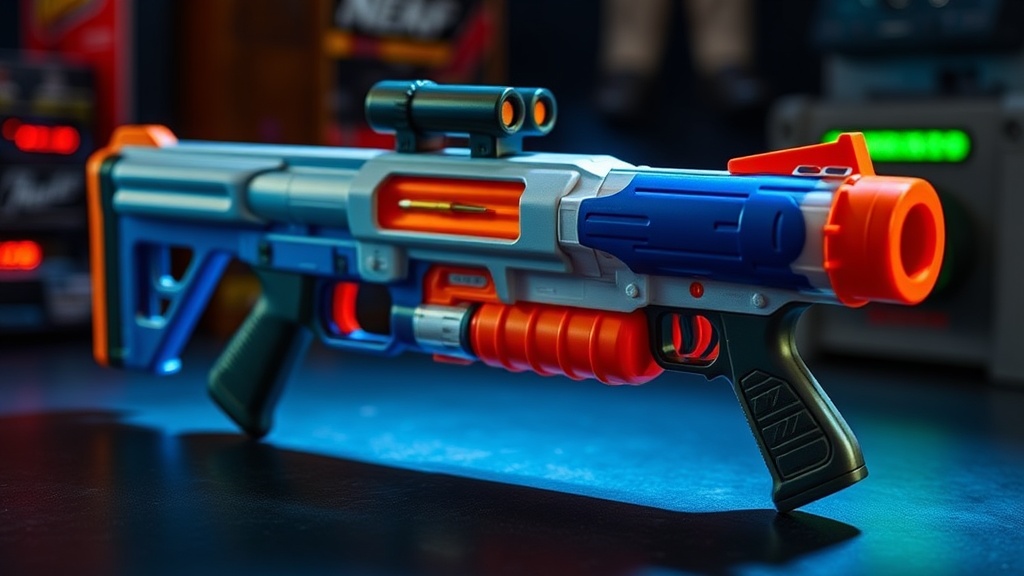
10 Rare Nerf Blasters Every Collector Needs to Hunt Down

Nerf Crossbow (1995) — The Original Holy Grail
Nerf Titan AS-V.1 — The Missile Launcher Beast
Blue Maverick Rev-6 — The Rare Colorway Gem
Nerf Stampede ECS — The Full-Auto Classic
Sonic Series Blasters — Transparent Treasures
This guide breaks down ten of the hardest-to-find Nerf blasters that serious collectors are actively hunting right now. Whether you're looking to complete a vintage N-Strike lineup or score a limited-edition movie tie-in, these models consistently command premium prices on the secondary market — and they're worth every penny if you care about building a collection that stands out.
What are the rarest Nerf blasters to collect?
The rarest Nerf blasters include discontinued original-series models, limited-run movie tie-ins, and regional exclusives that were never widely restocked. Here's a closer look at ten that belong on every collector's radar.
1. N-Strike Longshot CS-6 (Original Yellow)
The original Longshot CS-6 is the holy grail for many Nerf enthusiasts. Released in 2006 as part of the inaugural N-Strike series, this sniper-style blaster featured a detachable front gun, a folding bipod, and a six-dart clip system that was revolutionary at the time. It's not just nostalgia driving demand — the Longshot's direct plunger system makes it one of the most moddable blasters ever produced. That said, finding one in good condition with all original accessories (clip, darts, scope, and front gun) has become increasingly difficult. Expect to pay a premium for complete sets, especially if the original box is included. Even loose examples with cracked shells often sell quickly because modders want the internal plunger tube.
2. Vortex Pyragon
The Vortex Pyragon debuted in 2012 and quickly earned a reputation as the best disc blaster Nerf ever built. With its forty-disc drum magazine and slam-fire capability, it delivered a level of performance that the rest of the Vortex line couldn't match. The catch? Hasbro discontinued the entire Vortex series just a few years later, and the Pyragon — along with its unique discs — vanished from retail shelves. Today, sealed Pyragons regularly sell for double or triple their original MSRP on auction sites. If you spot one at a garage sale, don't hesitate.
3. N-Strike Rayven CS-18
Glow-in-the-dark darts were always a gimmick, but the Rayven CS-18 made them cool. This bullpup-style blaster featured an integrated Firefly Tech clip that charged darts as they fed into the flywheel system, creating a satisfying glow effect during nighttime battles. The original green Rayven is especially sought after because it was only produced for a limited window before Nerf shifted to the green-body Rayven Stinger and later the Elite blue reskin. Collectors love the compact profile and the unique firefly mechanism — both of which make this one a genuine shelf standout.
4. Star Wars Boba Fett EE-3 Blaster
Licensed blasters can be hit or miss, but the Boba Fett EE-3 — released as part of a Star Wars collaboration — is an absolute knockout. It faithfully recreates the bounty hunter's iconic rifle from The Empire Strikes Back while still functioning as a pump-action dart blaster. Here's the thing: it was a limited-run exclusive that never saw a full retail rollout in most regions. As a result, prices have climbed steadily, particularly for mint-in-box examples. It's one of the few Nerf products that appeals equally to toy collectors and Star Wars prop enthusiasts.
5. N-Strike Maverick REV-6
No list would be complete without the Maverick. This six-shot revolver was the entry point for thousands of collectors back in the mid-2000s. The original N-Strike blue version is the one to hunt for — later reskins (like the Sonic Series or clear variants) have their own fans, but the classic blue-and-orange combo remains the most iconic. Because it was so popular, you'd think they'd be everywhere. Worth noting: most were heavily used, abused, and discarded, so pristine examples with uncracked shells and functional rotation mechanisms are harder to find than you'd expect.
6. Vortex Nitron
Another casualty of the Vortex line's cancellation, the Nitron was Nerf's first electronic disc blusher. It ran on six C batteries and featured a detachable shield scope that doubled as a targeting display. It was bulky, loud, and undeniably fun. The Nitron's rarity stems partly from its original price point — it was expensive when new, so fewer units sold — and partly from the fact that disc blasters never reached the mainstream popularity of dart models. Finding one with the original shield and a working motor is a real win for any collection.
7. Halo MA40 Motorized Blaster
When Nerf partnered with 343 Industries to produce the Halo Infinite MA40, the result was one of the most visually striking blasters in recent memory. It includes a detachable ammo counter (powered by its own batteries) and a full-color game code for in-game cosmetics. While the initial release was fairly wide, the special-edition colorways and international variants have become genuinely scarce. The MA40 represents a high point for licensed Nerf products — it's screen-accurate, mechanically interesting, and surprisingly comfortable to shoulder. You can read more about current product lines and collaborations on Hasbro's official Nerf brand page.
8. Zombie Strike SlingFire
The SlingFire didn't just look cool — it introduced Nerf's first lever-action priming mechanism, which made it feel like a proper post-apocalyptic survival rifle. The original Zombie Strike release featured a distressed green finish with faux-wear details that perfectly matched the line's theme. It was restocked briefly but never in huge numbers, and the lever-action internals proved more fragile than standard slide-priming designs. That means working specimens in clean cosmetic condition are increasingly uncommon. For fans of the Zombie Strike aesthetic, this is the centerpiece blaster.
9. N-Strike Recon CS-6
The Recon CS-6 was essentially the modular little brother to the Longshot. It came with a detachable barrel extension, shoulder stock, and flip-up sight — all of which could be mixed and matched with other N-Strike accessories. The original yellow version is what collectors want. It was replaced by the Elite Retaliator in 2012, and while the Retaliator is a better performer, it lacks the classic N-Strike charm. Complete Recon CS-6 sets with all attachments are becoming harder to source, particularly in unopened packaging.
10. Elite Demolisher 2-in-1
The Demolisher 2-in-1 combined a standard flywheel dart blaster with an integrated missile launcher, giving players two firing modes in one bulky, aggressive package. It was part of the N-Strike Elite series and originally released in a distinctive orange-and-white color scheme. The missile launcher used proprietary "Nerf Missiles" that were larger than Mega darts and packed a satisfying punch on impact. Hasbro quietly discontinued the missile accessory line, which makes the Demolisher both a functional oddity and a piece of discontinued engineering. Missiles themselves now sell for surprising money — sometimes twenty dollars apiece. If you're buying a used Demolisher, always verify that the missile launcher tube is present and uncracked.
Are vintage Nerf blasters worth money?
Yes — vintage Nerf blasters can be worth anywhere from fifty dollars to well over five hundred, depending on condition, completeness, and whether the original packaging is intact. The collector market has matured significantly over the past decade, with dedicated communities tracking sales and verifying authenticity.
Rarity isn't the only factor driving value. Nostalgia plays a huge role. Many collectors in their twenties and thirties are buying the blasters they couldn't afford as kids. The original N-Strike series — launched in 2004 — sits right in that sweet spot. Models like the Longshot and Maverick trigger strong emotional responses, which translates to higher auction bids.
Condition matters enormously. A loose, well-used blaster might fetch thirty dollars. The same model sealed in its original box? Two hundred or more. Here's the thing: Nerf packaging from the 2000s wasn't designed to last, so mint boxes are genuinely scarce. Collectors often display boxes alongside the blasters, making original cardboard almost as valuable as the toy itself. For a broader history of how Nerf became a dominant force in the toy industry, check out the Wikipedia article on Nerf Blasters.
How can you tell if a Nerf blaster is rare?
Rarity usually comes down to production run length, regional availability, and whether the model was part of a short-lived sub-series or promotional tie-in. Before spending collector money, it pays to do a little homework.
Start by checking the series branding. N-Strike, Vortex, Dart Tag, and Zombie Strike all had models that were produced in limited quantities or discontinued early. Blasters tied to movies, video games, or retailer exclusives (like Target's Red Series or Toys "R" Us exclusives) tend to be harder to find. The catch? Not every "exclusive" becomes valuable — some were overproduced and remain cheap today.
Another reliable indicator is the ammunition type. When Nerf discontinues a dart or disc format, the blasters that use it often spike in value because replacement ammo becomes harder to source. The Vortex disc line is the most obvious example, but older Dart Tag blasters and missile-launching models have followed similar patterns. For detailed reference data on production runs and variants, the Nerf Wiki is an invaluable resource.
Here's a quick look at how value and rarity compare across some of the blasters mentioned above:
| Blaster | Original Release Year | Typical Loose Price | Typical MIB Price | Rarity Tier |
|---|---|---|---|---|
| Longshot CS-6 | 2006 | $60–$120 | $200–$400 | High |
| Vortex Pyragon | 2012 | $80–$150 | $180–$300 | High |
| Rayven CS-18 | 2012 | $70–$130 | $150–$280 | High |
| Maverick REV-6 | 2005 | $15–$40 | $80–$150 | Moderate |
| SlingFire | 2014 | $40–$90 | $120–$200 | Moderate-High |
Collecting rare Nerf blasters isn't about owning the most expensive toys on the shelf — it's about appreciating the design evolution, the marketing experiments, and the sheer fun that Hasbro packed into each release. Start with one or two models that genuinely excite you, learn their quirks, and hunt patiently. The best finds often show up in unexpected places: estate sales, thrift stores, and forgotten corners of closet shelves. Build slowly. Research constantly. And remember — every collector's path starts with that first lucky score. Happy hunting.