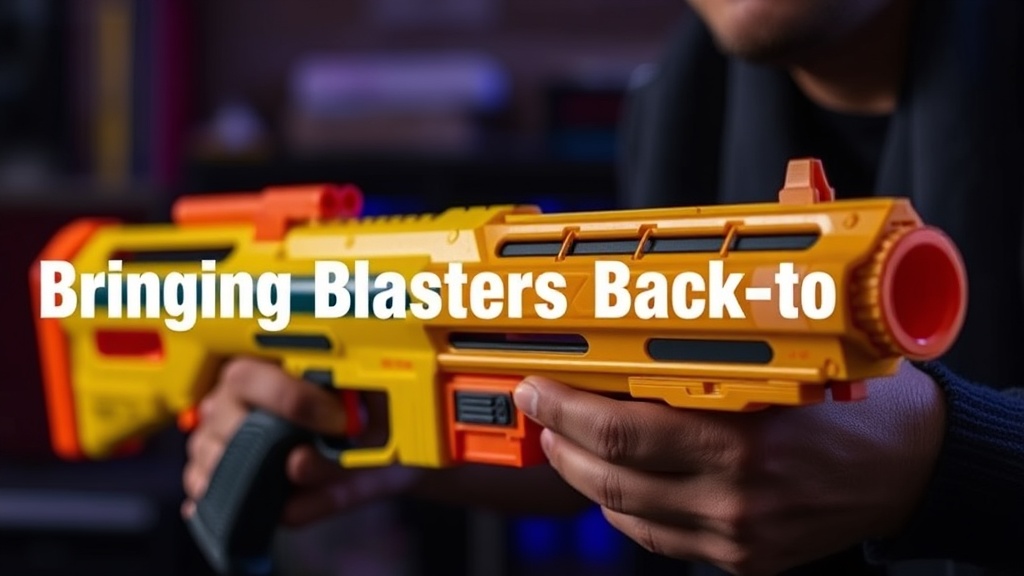
Bringing Blasters Back to Life: A Practical Guide to Common Nerf Gun Repairs

When a favorite blaster jams, misfires, or loses its punch, many collectors simply relegate it to the spare parts bin or—worse—the trash. But what if you knew that a staggering 70% of reported blaster malfunctions stem from just a handful of recurring, easily fixable issues? Understanding these common breakdowns and how to address them can not only save you money but also preserve cherished pieces for years of continued enjoyment or display. This guide covers the most frequent mechanical woes that plague Nerf blasters, providing clear, actionable steps to troubleshoot and repair them, ensuring your collection remains vibrant and functional.
As a community, we often celebrate the thrill of the hunt and the joy of display. Yet, the longevity of our blasters is just as important. A well-maintained and functioning blaster holds its value better, offers a more satisfying experience, and truly showcases the enduring design of these toy firearms. You don't need to be a master tinkerer to tackle these repairs; often, a few basic tools and a patient approach are all that's required to revive a seemingly dead blaster. Let's dive into the common culprits and their straightforward solutions.
Why won't my blaster fire or load darts properly?
Dart loading and firing issues are perhaps the most common complaints among Nerf enthusiasts, spanning everything from single-shot pistols to complex flywheel blasters. The problem almost invariably lies in one of two areas: the dart loading mechanism or the dart itself. First, always inspect your darts. Old, worn, or heavily creased darts are notorious for causing jams. Their diminished rigidity prevents them from feeding correctly into chambers or catching properly on plunger tubes. Discard any darts that are visibly damaged or excessively soft; fresh darts are a small investment that can save a lot of frustration.
Next, focus on the loading mechanism. For magazine-fed blasters, ensure the magazine itself isn't damaged or dirty. A cracked feed lip or debris inside the magazine can obstruct dart flow. Try a different, known-good magazine if you have one. For internal-magazine blasters (like many revolvers or front-loaders), look for any obstructions in the dart tooth or rotating cylinder. Sometimes, a piece of a torn dart or a foreign object can get lodged in the feed path. Use tweezers or a small pick to carefully remove any debris, making sure not to damage internal plastic components. A common issue with spring-powered blasters is a misaligned dart gate or an issue with the dart tooth failing to push the dart into the firing position. Often, a gentle tap or a complete disassembly (which we'll discuss later) might be needed to realign these internal pieces.
Flywheel blasters have their own unique set of dart-feeding issues. If darts aren't consistently launching, or if they just dribble out, the problem could be worn flywheels or a weak motor. Over time, the rubberized surface of flywheels can degrade, losing their grip on darts. Less commonly, the dart pusher mechanism—the part that pushes the dart into the flywheels—might be sluggish or misaligned. Inspect the flywheels for visible wear or smooth patches. If worn, replacing them is a relatively simple mod. For a deeper dive into flywheel care and upgrades, check out resources like