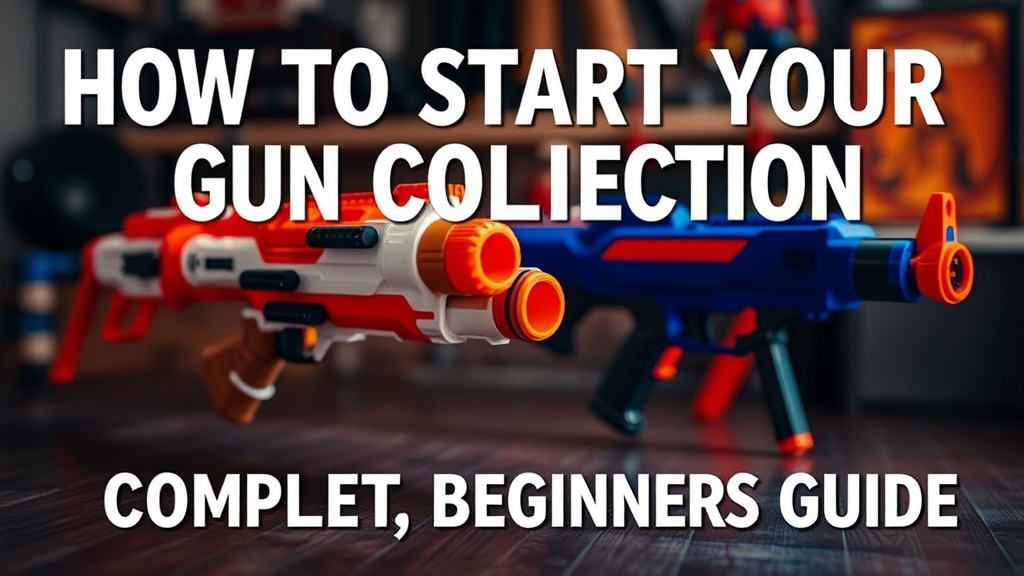
How to Start Your Nerf Gun Collection: A Complete Beginner's Guide

Starting a Nerf gun collection doesn't have to feel overwhelming. This guide breaks down exactly what to buy first, where to find rare blasters, how to store and maintain your arsenal, and what separates valuable vintage pieces from common shelf fillers. Whether you're drawn to the nostalgia of 1990s classics or the performance of modern releases, these practical steps will help build a collection worth showing off.
What Should You Buy First When Starting a Nerf Collection?
Begin with blasters that balance playability, historical significance, and resale potential. The N-Strike series (2009-2014) offers an accessible entry point — models like the N-Strike Maverick REV-6 and Recon CS-6 defined an era and remain affordable on the secondary market. These blasters introduced the tactical rail system that became standard across the line.
Here's the thing: don't chase rare variants on day one. Build a foundation with widely available models first. That said, avoid the ultra-budget options sold at drugstores — they're rarely worth preserving. Instead, target these three categories:
- Iconic plinkers — The Nerf N-Strike Elite Disruptor ($15-20 new) or Strongarm offer reliable mechanical action and clip compatibility
- One vintage piece — The 1995 Nerf Crossbow (original N-Strike predecessor) or a clean Ballzooka from the 1990s
- A modern performance model — The Nerf Rival line (Apollo, Helios) or Hyper series delivers higher FPS for adult collectors who actually want to use their blasters
The catch? Condition matters more than rarity at the entry level. A mint-in-box Disruptor from 2017 will hold value better than a beat-up 1990s Secret Shot with missing darts. Focus on complete, working blasters with original accessories.
Where Do Collectors Actually Find Rare and Vintage Nerf Blasters?
Secondary marketplaces, estate sales, and specialized trading communities yield the best results — but each has its own rhythm and risks. eBay remains the largest marketplace, though prices often reflect convenience premiums rather than true market value.
For better deals, check these sources regularly:
| Source | Best For | Average Discount vs. eBay | Watch Out For |
|---|---|---|---|
| Facebook Marketplace | Bulk lots, local pickup | 30-50% | Incomplete listings, no returns |
| Estate sales (suburban areas) | 1990s-2000s childhood collections | 60-80% | Heavy wear, missing parts |
| Reddit r/NerfExchange | Specific models, verified traders | 10-20% | Scams (use PayPal Goods & Services) |
| Thrift stores (Goodwill, Savers) | $2-5 impulse finds | 85-95% | Very sporadic, often broken |
| Nerf trading Discord servers | Modded blasters, community trust | Varies | Requires relationship building |
Worth noting: Hasbro's own Nerf website occasionally sells exclusive colorways and re-releases that become collectible. The 50th Anniversary N-Strike series (2029 releases) already commands premiums on secondary markets. Sign up for restock alerts if you're hunting specific modern exclusives.
Regional differences matter too. Portland's collector scene — where Mateo Malik operates — benefits from frequent swap meets at Guardian Games and quarterly events at the Portland Expo Center. East Coast collectors often cite stronger estate sale activity in suburban New Jersey and Long Island. Your geography shapes your strategy.
How Much Should You Expect to Spend Building a Serious Collection?
Budget $500-800 for a respectable starter collection of 15-25 blasters spanning multiple eras. That buys quality over quantity — mostly complete, working models with original darts or balls where applicable. The hobby scales dramatically from there; sealed vintage pieces like the original 1991 Blast-a-Ball can exceed $800 alone.
Here's a realistic breakdown for year one:
- Foundation phase (months 1-3): $200 — 8-10 modern blasters, one or two vintage pieces, basic storage
- Expansion phase (months 4-8): $300-400 — targeting specific series (Rival, Zombie Strike), attending one collector event
- Specialization phase (months 9-12): $200-500 — grail pieces, display improvements, protective cases
The real cost isn't just acquisition — it's space. A collection of 50 blasters requires roughly 40 linear feet of shelving (or creative wall mounting). Climate control matters too; Nerf foam degrades in extreme heat and UV exposure degrades plastic colors over time. Budget $100-200 for proper storage before your blaster count hits double digits.
That said, Nerf collecting offers genuine resale liquidity uncommon in toy hobbies. Limited releases like the Nerf Fortnite B-AR or Roblox Jailbreak: Armory exclusives often appreciate 50-200% within 18 months of discontinuation. Document your purchases. Keep original boxes when possible. The buy-and-hold strategy actually works here.
What's the Difference Between Vintage, Classic, and Modern Nerf?
Understanding generational divides prevents costly mistakes and helps curate a coherent collection. Hasbro's Nerf line has evolved through distinct eras, each with different build qualities, firing mechanisms, and collector appeal.
Vintage Era (1989-2001): The original Kenner-produced and early Hasbro lines. Ball-based blasters dominated — the Blast-a-Matic, Master Blaster, and Arrowstorm defined the aesthetic. These used thicker, more durable plastics than modern equivalents. The foam was denser too. Prices range from $30 (common Ballzookas) to $500+ (sealed Arrowstorms). Worth noting: many vintage blasters used different ammo types that are now scarce — Mega Arrows, Ballistic Balls, and Missiles require specialized sourcing.
Classic Era (2003-2014): The N-Strike revolution. This period introduced clip-fed dart systems, tactical rails, and the modular aesthetic that defined modern Nerf. The 2009-2012 "blue trigger" N-Strike Elite releases remain particularly collectible — they delivered 70-75 FPS out of the box (higher than subsequent safety-reduced versions). Look for the Stampede ECS, Rayven CS-18, and original Vulcan EBF-25. These hit the sweet spot of performance nostalgia.
Modern Era (2015-present): Accelerated release cycles, licensed collaborations, and diversification into Rival (round balls), Hyper (smaller balls), and Mega (larger darts). Quality control has become inconsistent — some 2022-2024 blasters feel noticeably cheaper than 2010s equivalents. The exceptions: Rival line products (mostly made in separate factories) and Adult Creator Series releases like the Nerf LMTD series — premium-priced, high-performance blasters explicitly marketed to collectors.
How to Identify Valuable Variants
Not every old blaster is valuable. Red flags that indicate common, low-value pieces: broken triggers (extremely common), sun-faded plastic, missing ammo, and aftermarket springs (indicates modification — which ruins collectible value for purists). Green flags: original stickers intact, clear production date stamps (under the priming handle or battery door), and "Made in USA" markings (pre-2005).
The most undervalued segment right now? 2011-2014 N-Strike clear series (Sonic, Clear, Gear Up). These translucent or partially-transparent blasters were Targets exclusives and now trade at 2-3x standard pricing. The Sonic Series Maverick in sealed condition regularly hits $80-120 — not bad for a blaster that retailed for $14.99.
How Should You Store and Display a Nerf Collection?
Proper storage prevents the three killers of collectible blasters: UV fading, foam compression, and spring fatigue. The solution depends on your goals — are these for display, occasional use, or pure investment?
For display collections, wall mounting beats shelving. Horizontal placement prevents spring compression in magazine-fed blasters. Use Monkey Hooks or adhesive strip mounts rated for 5+ pounds — most Nerf blasters weigh 1-3 pounds unloaded. Arrange by era or color for visual impact. The "rainbow wall" aesthetic (organizing by color gradient) photographs well for social sharing and community engagement.
For storage collections, airtight bins with silica gel packets protect against humidity. Don't stack blasters more than two deep — pressure warps plastic over time. Remove batteries from motorized models (the Stampede, RapidStrike, Stryfe family) before long-term storage; leaked alkaline batteries destroy more collections than dust ever has.
The catch? Original boxes dramatically increase resale value but require massive storage space. Flat-packed boxes take 80% less room than assembled. If you're serious about the investment angle, keep boxes in separate bins away from light, and photograph the UPC codes for inventory tracking.
Climate-controlled environments aren't optional for foam longevity. Ideal conditions: 60-75°F, 30-50% humidity. Attics and garages kill collections — the thermal cycling degrades glue joints and warps plastic. If you must store in marginal spaces, rotate pieces indoors quarterly.
Maintenance for Working Collections
Blasters you actually fire need different care. Lubricate o-rings annually with pure silicone grease (not petroleum-based — it degrades rubber). Inspect dart posts for cracks — they're the most common failure point. Keep a "parts blaster" box for donor components; broken triggers and catch mechanisms from common models can salvage rare pieces.
The Rival and Hyper lines require additional attention — their hop-up systems (the mechanism that imparts backspin for accuracy) collect dirt and debris. A cotton swab with rubbing alcohol cleans the hop-up tab monthly if you're actively using them.
"Start with what you loved as a kid, buy what you'll actually use today, and only chase investment pieces once you understand why you care about the hobby." — Common advice from veteran collectors on the r/Nerf community
Nerf collecting rewards patience more than deep pockets. The $200 "lot buy" on Craigslist — ten blasters with three gems hidden inside — beats chasing individual eBay auctions every time. Build relationships with local players, learn to spot the difference between wear and abuse, and don't let FOMO drive purchasing decisions. The next great release is always six months away.
Steps
- 1
Research Nerf blaster series and identify which models interest you most
- 2
Set a budget and find reputable sellers at thrift stores, eBay, and collector forums
- 3
Inspect blasters for condition, functionality, and completeness before purchasing