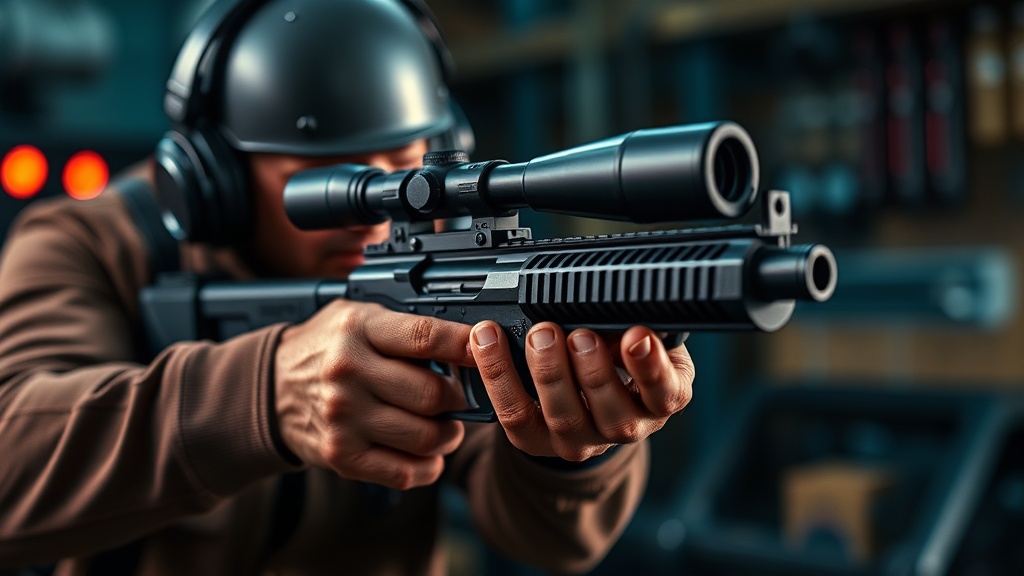
Improving Your Blaster Performance with Spring and Seal Upgrades

You’ve just pulled the trigger on your favorite blaster, but instead of a satisfying thud, you hear a weak hiss and the dart barely travels five feet. This usually means you're losing air pressure through a leaky seal or an underpowered spring. This guide breaks down exactly how to identify air leaks and upgrade your internal components to get more velocity and consistency out of your collection.
What are the most common causes of low dart velocity?
The most common causes of low dart velocity are air leaks in the plunger tube and a spring that lacks the tension required to push the plunger fast enough. If air escapes around the sides of the piston or through the O-ring, the dart won't receive the full force of the air blast. Even a tiny gap can ruin your accuracy and distance.
When you're looking at a blaster like the Nerf Rival series or a standard Mega blaster, the air path is everything. If the seal isn't perfect, you're essentially wasting energy. You'll see this most often in older blasters where the rubber O-rings have dried out or become brittle over time.
There are three main areas to check:
- The Plunger O-ring: This is the ring that creates the seal against the cylinder wall.
- The Plunger Tube: If the tube is scratched or uneven, the O-ring can't maintain a consistent seal.
- The Air Breach: This is where the air moves from the plunger to the dart barrel.
It's a frustrating process when you've spent a decent amount of money on a high-end blaster and it performs like a budget toy. A quick fix often involves replacing the stock rubber components with high-quality aftermarket parts.
How do I upgrade my blaster's spring?
Upgrading your spring involves replacing the stock spring with a higher-tension spring to increase the speed of the plunger stroke. A stronger spring forces the plunger to move faster, which pushes more air into the dart in a shorter amount of time.
Most hobbyists look for brands like Worker or Ignition X when they want more power. These springs are specifically engineered to provide a higher rate of return than the standard factory-installed ones. However, don't go too heavy—if the spring is too strong, you might actually decrease your velocity because the plunger can't complete its stroke fast enough (a phenomenon known as "air turbulence").
Before you dive into a spring swap, you should understand the relationship between spring weight and air volume. You can read more about the physics of projectile motion on the Britannica page for projectile motion to see how velocity affects distance. It's not just about raw power; it's about the efficiency of the air transfer.
Pro Tip: Always check your blaster's shell integrity before installing a heavy spring. A high-tension spring can crack cheap plastic housings if the internal structure isn't reinforced. I've seen many collectors accidentally snap their blaster shells because they were too aggressive with the upgrade.
| Upgrade Type | Primary Benefit | Difficulty Level | Impact on Velocity |
|---|---|---|---|
| Stock Spring | Standard performance | N/A | Baseline |
| Medium Spring | Increased distance | Low | Moderate Increase |
| Heavy Spring | Maximum power | Medium | High Increase |
| O-Ring Upgrade | Consistency/Seal | Low | Subtle but vital |
How do I fix air leaks in my plunger tube?
Fixing air leaks requires applying a thin layer of silicone grease to the O-ring or replacing the O-ring entirely with a higher-quality version. A better seal ensures that 100% of the air pushed by the plunger ends up behind the dart.
The first thing you should do is inspect the O-ring. If it looks flat, cracked, or feels "crunchy," it’s time for a change. You can find detailed technical specifications for various materials on Wikipedia's entry on elastomers to understand why certain rubbers work better than others. For most Nerf enthusiasts, a standard 1/8" or 3/16" O-ring from a brand like XMT or Worker is the way to go.
Here is the step-by-step process for a standard seal upgrade:
- Disassemble the blaster: Carefully remove the shell to access the plunger tube.
- Inspect the plunger head: Look for any signs of wear or debris on the piston.
- Clean the tube: Use a lint-free cloth to remove any old grease or dust.
- Apply Lubricant: Use a tiny amount of 100% silicone grease. Avoid petroleum-based lubricants—they will eat through the rubber and ruin your seal!
- Test the Seal: If you still hear air escaping, you might need a larger O-ring or a different thickness.
Sometimes, the issue isn't the O-ring itself, but the diameter of the plunger tube. If you're using an aftermarket O-ring that is too small, air will bypass the seal entirely. This is a common mistake when mixing and matching parts from different manufacturers.
If you find yourself spending a lot of time on these internal adjustments, you might want to look at how you store your tools. I previously wrote about organizing your collection with modular storage solutions, which is a great way to keep your screwdrivers, lubricants, and replacement O-rings in one place.
Don't forget that a better seal isn't just about power. It's about consistency. If you have a consistent seal, your darts will hit the same spot every time. This is the difference between a "fun toy" and a high-performance tool. If you're hitting the range often, you'll notice that even a small improvement in the seal can drastically reduce your "scatter" or group size.
One thing to keep in mind: a more powerful spring requires a better seal to actually see the results. If you put a heavy spring in a blaster with a leaky O-ring, you're just making the blaster harder to pull without gaining any actual distance. It's a waste of time and money.
If you're working on older, vintage blasters, be extra careful. The plastic can be brittle. I've seen many people crack the shell while trying to tighten the screws after a spring upgrade. Go slow, and don't force anything.
The goal is to create a perfect airtight environment. Once you master the art of the seal, you can start looking at more advanced modifications like ported barrels or custom-weighted darts. But for now, focus on the basics: the spring and the seal. They are the foundation of everything else.
Steps
- 1
Inspect the Air Seal
- 2
Replace the Spring
- 3
Apply Lubricant to O-Rings
- 4
Test Flight Consistency