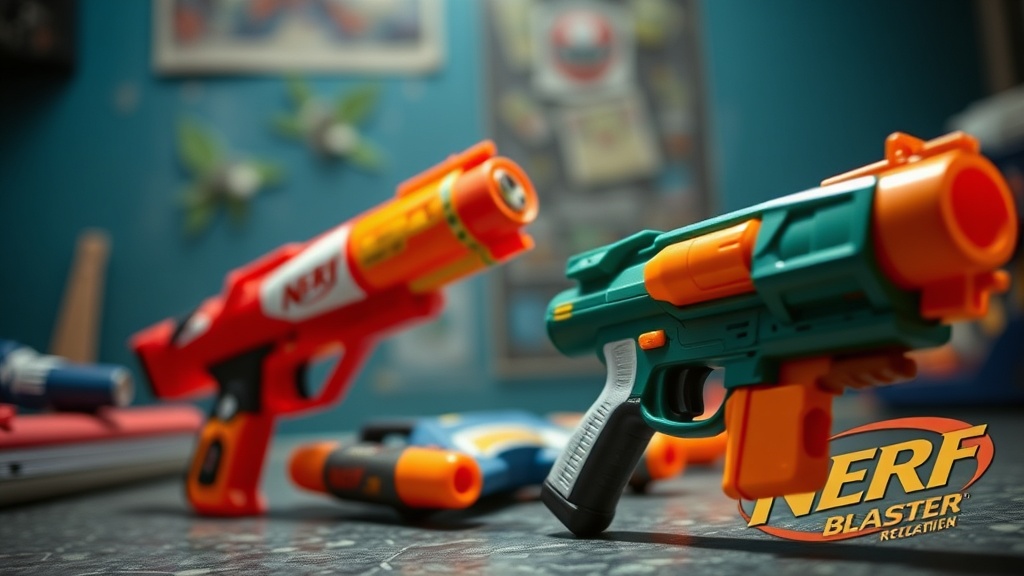
Ultimate Guide to Collecting Vintage Nerf Blasters

This guide covers everything needed to start collecting vintage Nerf blasters — from identifying rare models and understanding value factors to proper storage and authentication techniques. Whether building a collection as a hobby or investment, knowing what to look for saves money and helps avoid common mistakes that trip up beginners.
What Makes a Nerf Blaster "Vintage"?
A Nerf blaster earns vintage status when it's at least 20 years old and no longer in production. The original Nerf bow — introduced in 1992 — kicked off the foam projectile revolution. Blasters from the 1990s and early 2000s represent the golden age of mechanical engineering before electronic gimmicks took over.
The Nerf Wiki maintains a comprehensive database of discontinued models. Vintage pieces typically feature stronger springs, heavier plastic, and simpler internals than modern equivalents. The 1994 Ballzooka MP150 remains a collector favorite — its rotating barrel mechanism inspired dozens of later designs.
Production years matter. Hasbro acquired Nerf in 1991 and immediately expanded the lineup. Pre-2000 blasters carry higher premiums due to smaller production runs and superior build quality. The iconic Crossbow (1995) — with its dual-action pump mechanism — commands $200+ in working condition.
Packaging adds significant value. Mint-in-box specimens from the 1990s can fetch 3-4x the price of loose blasters. Original price tags, instruction manuals, and unopened dart packs sweeten the deal considerably.
How Much Are Vintage Nerf Blasters Worth?
Values range from $15 for common models to over $500 for sealed rare pieces. Condition drives pricing more than age — a beat-up 1992 blaster sells for less than a pristine 2005 release. The collector market follows supply and demand like any other hobby space.
Here's what actual vintage Nerf models currently fetch on the secondary market:
| Model | Year | Loose (Good Condition) | Mint in Box |
|---|---|---|---|
| Crossbow | 1995 | $180-$250 | $400-$600 |
| Ballzooka MP150 | 1994 | $60-$90 | $150-$220 |
| Secret Shot II | 1996 | $40-$65 | $100-$140 |
| Razorbeast | 1998 | $50-$80 | $120-$180 |
| Wildfire | 1999 | $30-$50 | $80-$110 |
| SuperMaxx 5000 | 1997 | $90-$140 | $250-$350 |
Limited releases command premiums. The SuperMaxx 5000 — a pump-action monster with a massive air tank — rarely surfaces complete. The 1997 Chainblazer introduced belt-fed firing (a novelty then) and remains sought after.
Regional variants add complexity. European releases often featured different color schemes and weaker springs due to safety regulations. Australian-market blasters from the 1990s are especially scarce — tighter import restrictions meant smaller production numbers.
Price tracking requires diligence. eBay sold listings provide the most accurate current valuations. The r/Nerf community maintains price check threads where experienced collectors offer realistic appraisals. Expect prices to fluctuate — vintage toy markets spike during holiday seasons and dip in summer.
Where's the Best Place to Buy Vintage Nerf Blasters?
eBay dominates the vintage Nerf market — but it's not the only option. Estate sales, thrift stores, and Facebook Marketplace regularly yield better deals for patient hunters. The key is knowing where to look and what questions to ask.
Online marketplaces offer convenience and selection:
- eBay: Largest inventory, buyer protection, but premium prices. Use saved searches with notifications.
- Mercari: Growing toy section, often cheaper than eBay. Check seller ratings carefully.
- Facebook Marketplace: Local pickup eliminates shipping costs. Search terms like "old Nerf guns" or "vintage toys" — sellers rarely know specific model names.
- Reddit r/NerfExchange: Community-driven sales with vetted sellers. Prices trend closer to fair market value.
Offline hunting requires persistence but pays off. Here's the thing — most people selling vintage Nerf at garage sales have no idea what they have. A $5 purchase might be worth $150. Estate sales in suburban neighborhoods (especially those with teenage sons in the 1990s) are goldmines.
The catch? You'll need to verify functionality on the spot. Bring batteries for electronic models. Test pump actions and trigger pulls. Check for cracks in air tanks — irreparable damage that kills value.
Thrift stores rotate inventory constantly. Build relationships with staff at Goodwill, Salvation Army, and local charity shops. Some locations will call when toy donations arrive. Value Village locations in Canada and the northern US see more vintage Nerf than southern states.
Specialized dealers exist but charge accordingly. The Etsy marketplace features restored and modded vintage blasters — useful if you want display pieces rather than investment items. Expect to pay 50-100% above market rate for the convenience.
How Do You Spot Fake or Reproduction Vintage Nerf?
Counterfeits plague the vintage Nerf market — especially for high-value models like the Crossbow and SuperMaxx series. Learning authentication techniques protects your wallet and collection integrity.
Hasbro used specific molding marks on vintage pieces. Look for "HASBRO INC" or "© [YEAR] HASBRO" embossed on the plastic — usually inside the handle or on the underside of the barrel. Modern reproductions often skip these details or use different fonts.
Plastic quality tells the story. Genuine vintage Nerf uses thick, dense ABS plastic with a slightly textured finish. Fakes feel lighter, hollower, and often have glossy surfaces. The weight difference is immediately noticeable when holding authentic versus counterfeit pieces side by side.
Color accuracy matters. The original Crossbow features a specific forest green — reproductions tend toward brighter, cheaper-looking shades. Compare against reference photos from the Nerf Wiki or collector forums before purchasing expensive pieces.
Internal mechanisms reveal the truth. Vintage air-powered blasters use specific o-ring sizes and spring configurations. Open the casing (carefully — this voids any remaining value) and compare internals against documented disassembly photos. Chinese knockoffs use metric hardware and visibly different spring designs.
Seller behavior provides clues. Legitimate sellers photograph all angles, including manufacturer marks. They'll answer specific questions about provenance. Scammers use stock photos, vague descriptions, and pressure tactics ("rare item — buy now!").
Worth noting: some "fakes" are actually legitimate regional variants. The European Max Force series used different color schemes than American releases — these aren't counterfeits, just imports. Always research regional differences before crying foul.
What's the Best Way to Store and Maintain a Vintage Collection?
Proper storage prevents the plastic degradation and spring fatigue that destroy vintage blaster value. Temperature, humidity, and positioning all impact long-term preservation.
Climate control isn't optional. Store blasters between 65-75°F (18-24°C) with 40-50% relative humidity. Basements and attics are terrible choices — temperature swings cause plastic expansion and contraction that leads to cracking. A closet in a climate-controlled room works best for most collectors.
Positioning prevents warping. Never store blasters with springs compressed — this includes cocked hammers, primed pumps, and loaded magazines. The spring steel in 1990s blasters is higher quality than modern equivalents but will still fatigue under constant tension. Store in the resting position always.
Display considerations balance aesthetics with preservation. Direct sunlight yellows plastic within months. UV-filtering display cases help, but keep them away from windows entirely. LED lighting produces minimal heat and no UV — perfect for showcasing rare pieces.
Cleaning requires restraint. Dust with microfiber cloths only. Never use alcohol, ammonia, or harsh cleaners on vintage plastic — they cause crazing (microscopic cracks) that destroys clarity and value. Warm water and mild dish soap handle dirt buildup safely.
O-ring maintenance keeps air-powered blasters functional. Silicone grease (not petroleum-based) lubricates seals without degrading rubber. The SuperMaxx and Airtech series especially benefit from annual o-ring conditioning — dried-out seals leak air and reduce performance to zero.
Documentation protects investment value. Photograph each blaster from multiple angles, record serial numbers where present, and keep purchase receipts. Insurance companies require proof of value for collectible coverage — the photos and documentation you compile today become crucial evidence if disaster strikes.
Starting a vintage Nerf collection rewards patience more than deep pockets. Begin with affordable, common models to learn authentication and restoration skills. Gradually work toward the grails — the Crossbow, SuperMaxx 5000, and other blue-chip pieces that define serious collections. The hunt itself becomes half the enjoyment.