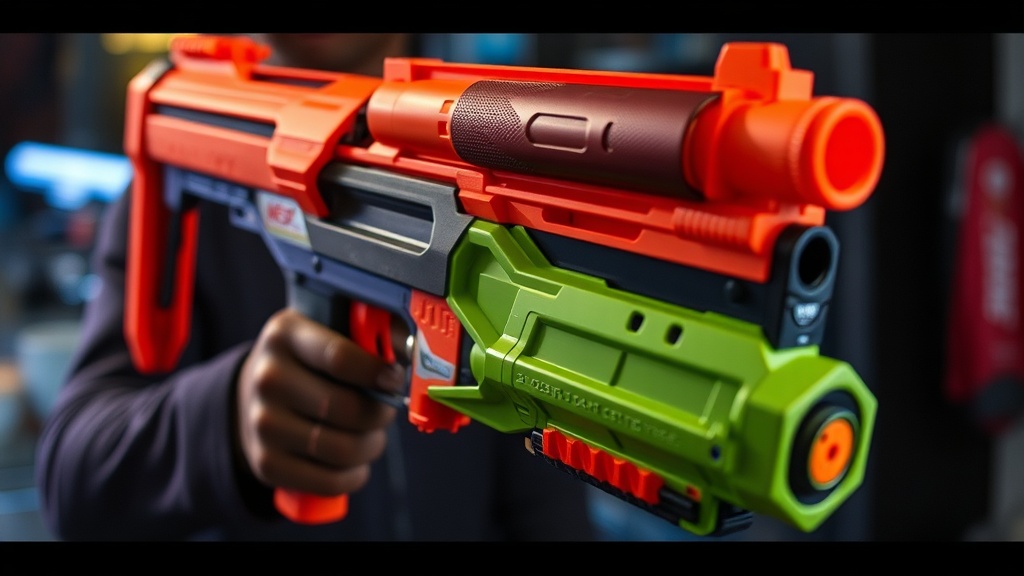
What Makes Certain Nerf Blasters Worth Hundreds on the Secondary Market?

Why do some plastic dart guns sell for more than your monthly car payment?
Spend enough time in collector circles and you'll hear whispers about blasters trading hands for three—sometimes four—figures. Not prototypes. Not one-of-a-kind factory samples. Mass-produced toys that sat on Walmart shelves fifteen years ago. This post examines the specific factors that transform ordinary foam-flingers into legitimate investment-grade collectibles. We'll look at discontinued lines, regional exclusives, packaging quirks, and the community dynamics that drive demand. Whether you're sitting on a childhood arsenal or hunting your first grail piece, understanding these value drivers matters.
What discontinued Nerf lines command the highest resale prices?
Certain product families have achieved near-mythical status among collectors. The N-Strike Unity Power System—that ridiculous tripod-mounted monstrosity from 2008—regularly fetches $300-500 sealed. Why? Hasbro produced it for exactly eighteen months before discontinuing the line. The massive size made storage difficult, so intact examples with original packaging became rare through attrition alone.
The Vortex series represents another fascinating case study. These disc-shooting oddballs flopped commercially—kids found the discs unpredictable and prone to losing them in gutters. Collectors now prize them precisely because they failed. The Vortex Pyragon with its forty-disc drum commands $200-250 loose, nearly triple its original retail price. Limited production runs plus short market lifespan equals scarcity.
Don't overlook AirJet Power blasters from the late 1990s. These pre-electronic pump guns used an air-pressure tank system that Hasbro abandoned for cost reasons. Models like the Wildfire (twenty-shot rotary action) appear on eBay perhaps twice monthly. Condition matters enormously here—the rubber seals degrade over decades, so functional examples carry significant premiums.
How do regional exclusives create artificial scarcity?
Hasbro's international distribution has always been maddeningly inconsistent. Some blasters released exclusively in Asian or European markets never officially reached North American shelves. The N-Strike Deploy CS-6 in its original blue color scheme appeared only in Australia for six months. American collectors desperate to complete color-variant sets drove prices to $150-200 for what was essentially a $25 flashlight-gun combo.
Japan received several exclusive N-Strike Elite recolors through Takara Tomy partnerships. The Retaliator in white and orange trim—never sold stateside—now trades at $250-400 depending on accessories. Japanese packaging also featured superior graphic design and Japanese text, adding aesthetic appeal for display-focused collectors.
European markets saw exclusive Zombie Strike variants with alternate deco schemes. The SlingFire in "survivor green" versus the standard orange trim creates enough differentiation that completists pay 3-4x retail. This geographic fragmentation means smart collectors monitor international Facebook groups and Japanese auction sites like Buyee for sourcing opportunities.
What packaging details separate valuable collectibles from loose blasters?
Serious collectors obsess over packaging condition—and for good reason. A blaster "new in sealed box" (NISB) can command 5-10x the price of a loose example. But not all packaging is created equal. First-run production boxes often differ subtly from later printings. Early N-Strike Longshot CS-6 boxes featured a yellow "Try Me!" burst sticker that later batches omitted. These sticker variants sell for premiums to completists.
Mail-away promotions created some of the most desirable packaged items. The N-Strike Sonic Series—including translucent green versions of popular blasters—was available only through Hasbro's website with proof-of-purchase redemptions. Original mailer boxes with packing slips command $400-600. The blasters themselves are cool, but the complete fulfillment package tells a story that collectors value.
Collector clubs and convention exclusives represent another packaging goldmine. Hasbro's SDCC (San Diego Comic-Con) exclusives—like the Whiteout Series or Sonic Ice variants—shipped in numbered boxes with certificates. Limited runs of 500-1000 units create instant scarcity. These rarely appear on secondary markets, and when they do, the original convention packaging justifies prices exceeding $1,000.
Which material and design quirks drive collector interest?
Transparent plastics hold special appeal in the Nerf collecting world. The Clear Series—released in limited quantities during 2009-2010—showed internal mechanisms through tinted polycarbonate shells. Kids found them less appealing than opaque colors, so production stopped. Today, a Clear Maverick REV-6 sells for $80-120 versus $10-15 for the standard blue version.
Glow-in-the-dark variants from the Firefly REV-8 era command similar premiums. These incorporated phosphorescent compounds that actually worked—charge them under light and they'd glow for hours. The chemical formulation changed in later production runs, making early "bright glow" versions identifiable and desirable. Discerning collectors bring UV flashlights to examine yellowing patterns that indicate production era.
Prototype and pre-production samples occasionally surface from factory contacts or former Hasbro employees. These lack final paint applications or feature hand-assembled internals. While fascinating, they're controversial in collecting circles—some purists consider them stolen property rather than legitimate collectibles. The Nerf Wiki maintains documentation of known prototype variations for authentication purposes.
Where should collectors hunt for undervalued pieces?
Facebook Marketplace and Craigslist remain surprisingly fertile hunting grounds—if you move fast. Parents cleaning out grown children's closets rarely research values before listing. "$20 for this box of Nerf guns" posts appear daily in major metro areas. The key is monitoring notifications and responding within minutes. Portland's collector community is particularly active; local swap meets at the convention center occasionally yield remarkable finds.
Estate sales represent higher-risk, higher-reward territory. Search terms like "toy collection," "boy's room," or "playroom cleanout" often surface unlisted Nerf inventory. Arrive early with cash and a smartphone for quick value verification. The emotional context matters—bereaved families selling deceased relatives' collections rarely price aggressively, focusing instead on finding appreciative homes for beloved possessions.
International arbitrage still works for patient collectors. UK eBay frequently lists N-Strike Elite variants that never reached American shelves. Shipping costs hurt, but the spread between UK and US pricing often justifies the hassle. German collector forums move slowly but feature serious sellers with well-documented inventories. Google Translate is your friend here.
How do you authenticate potentially valuable finds?
Counterfeits and knockoffs plague the high-end Nerf market. Chinese manufacturers produce convincing replicas of popular blasters, often using lower-grade plastics that yellow faster. Authentic Hasbro products feature specific mold markings—"© HASBRO" plus a two-digit year code—on internal structural pieces. Replicas sometimes omit these or use incorrect fonts.
Serial numbers help verify limited editions. Convention exclusives and mail-away promotions featured numbered certificates or printed serials on packaging. Cross-reference these against documented production runs. The r/Nerf community maintains reference threads tracking known authentic serial ranges.
Provenance matters for serious acquisitions. Reputable sellers document their sourcing—estate sales, original retail purchase, trade documentation. Be wary of "found in storage" stories for high-value items. Ask for additional photos of specific details: battery compartment corrosion patterns, screw head types, or wear marks that indicate genuine use versus artificial aging.
Building a valuable collection takes patience and knowledge. Chasing every trending piece leads to overpayment and buyer's remorse. Focus on categories that genuinely interest you—transparents, vintage air-pressure systems, or regional exclusives—and develop deep expertise. The collectors who thrive long-term are those who buy what they love, verify carefully, and remember that today's $50 find might fund tomorrow's grail acquisition. Happy hunting.