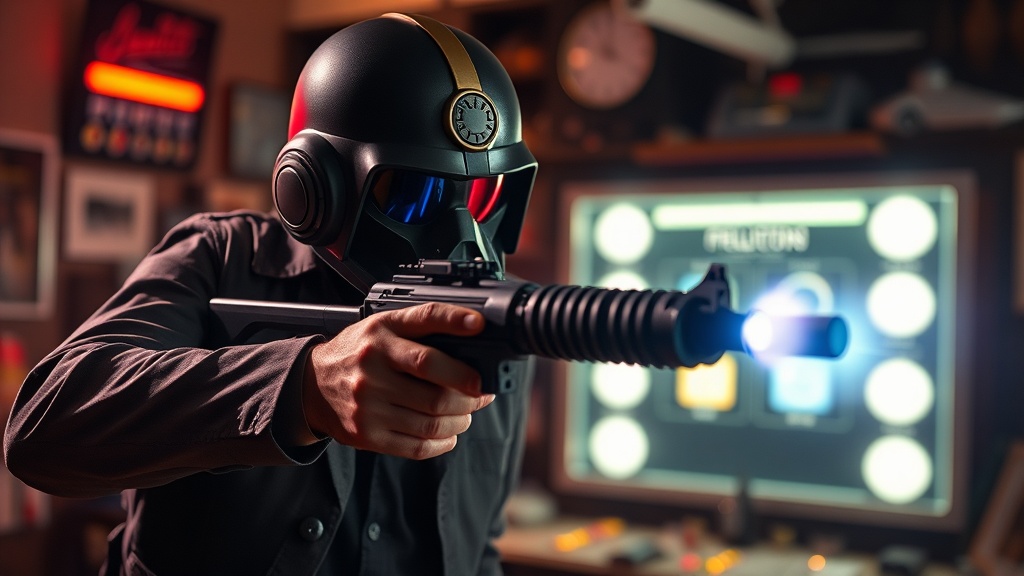
What Separates a Common Blaster from a True Collector's Item?

You've seen it happen — a blaster that sat on store shelves for $29.99 three years ago now commands $300 on the secondary market. Meanwhile, dozens of other models released at the same price point barely fetch their original retail cost. Walk into any collector's basement in Portland (or browse the trading forums on Reddit's Nerf community) and you'll find walls lined with plastic that tells a very different financial story.
Understanding what creates value in Nerf collecting isn't about chasing hype — it's about recognizing the specific factors that transform mass-produced toys into sought-after collectibles. Whether you're curating your first serious collection or wondering if that attic find is worth more than sentimental value, knowing these distinctions will save you from costly mistakes and missed opportunities.
What Makes a Blaster "Rare" Versus Just Hard to Find?
True rarity and artificial scarcity are two very different beasts. Hasbro releases dozens of blasters annually, but only a fraction become genuine collector's items. The distinction usually comes down to production numbers, distribution strategy, and timing.
Limited production runs create the foundation for collectible value. The Nerf N-Strike Unity Power System — released in 2003 as a Walmart exclusive — had a constrained manufacturing window. When production ended, that was it. No restocks, no reissues. Compare that to the perennially available Strongarm, which Hasbro has manufactured continuously for over a decade. One sits in glass display cases; the other fills donation bins.
Regional exclusivity adds another layer. Japanese market releases like the Takara Tomy-branded Nerf blasters rarely appeared outside Asia, making them instant collector targets in North American markets. The same holds for European-exclusive colorways or Australian-market packaging variants. These aren't necessarily "better" blasters — they're simply unattainable through normal retail channels for most collectors.
Promotional and tie-in releases follow their own logic. Movie partnership blasters (think the Rogue One Death Trooper blaster or Fortnite collaborations) often have predetermined production ceilings tied to licensing agreements. Once the promotional window closes, Hasbro legally cannot manufacture more — even if demand surges. This creates a hard cap on supply that standard retail releases never face.
Here's where it gets tricky: discontinued doesn't automatically mean valuable. The first-generation Vortex line failed commercially and was discontinued — but abundant remaining stock kept prices depressed for years. True collector interest requires both scarcity and sustained demand from passionate owners.
How Does Condition Affect Long-Term Value?
In collectibles markets, condition isn't merely about aesthetics — it's about preserving the object's original state. For Nerf blasters, this gets complicated because these were designed as toys, not display pieces. The difference between "mint" and "excellent" condition can mean hundreds of dollars at sale.
Packaging integrity matters enormously. Collectors pay significant premiums for blasters in unopened original boxes — especially if the packaging itself was distinctive. The original 1995 Nerf Crossbow box art, for instance, has become iconic enough that collectors specifically seek "MIB" (mint in box) specimens over loose examples. Even damaged boxes often outperform loose blasters because they provide provenance and protect against replacement part fraud.
Functional condition operates on a separate but related axis. A blaster that cannot fire may still hold substantial value if it's cosmetically pristine and complete — particularly for display-focused collectors. However, serious collectors (the kind who maintain shooting collections) discount non-functional pieces heavily unless the model is extraordinarily rare. The Nerf Wiki maintains detailed specifications that help collectors verify whether a blaster retains all original components.
Yellowing plastic represents the most common condition issue. Early Nerf blasters used plastic formulations prone to UV degradation — that cloudy, mustard-colored patina that screams "thrift store find." While restoration techniques exist (and we've covered those elsewhere), purists view unyellowed original plastic as the gold standard. A pristine 1990s blaster with original white plastic commands multiples over a yellowed equivalent.
Paint and labeling integrity matters too. Sticker sheets that remain unapplied, original darts in factory packaging, included accessories like shoulder straps or tactical rails — these details separate investment-grade pieces from player-grade blasters. Document everything when you acquire a collectible; future buyers will want provenance.
What Role Do Modifications Play in Collectible Value?
This is where collector philosophy diverges sharply. The Nerf hobby has always had twin souls: collectors who preserve and players who modify. When these worlds collide around the same object, valuations get complicated.
Factory-original condition remains the safest bet for pure investment. Any modification — even reversible ones like spring replacements or cosmetic repaints — immediately limits your buyer pool to people who value those specific changes. That said, certain modifications can increase value when executed by recognized artisans. A blaster modified by a well-known competitive player or featured in a popular YouTube series may carry premiums based on provenance rather than the modifications themselves.
The third-party blaster market creates interesting valuation questions. Companies like Worker, Artifact, and Jet Blaster produce aftermarket frames, internals, and complete blasters that often outperform Hasbro originals. These occupy a gray zone — technically Nerf-adjacent collectibles, but not official Nerf products. Their values track more like boutique electronics than traditional collectibles, driven by performance benchmarks and community reputation rather than nostalgia or scarcity.
Documentation becomes critical here. A modified blaster with no build history or parts list is worth less than an identical modification with full photographic documentation and component sourcing. The Nerf Haven forums maintain extensive modification archives that help establish whether changes were done skillfully — or butchered by an amateur with a Dremel.
Which Categories Show the Strongest Collector Interest?
Not all collecting niches appreciate equally. Understanding where the market concentrates can guide acquisition decisions — whether you're building a focused collection or speculating on future value.
Vintage Nerf (roughly 1992-2005) represents the blue-chip tier. These blasters benefit from nostalgic demand from adult collectors who owned them as children, combined with genuinely limited surviving quantities. The 1995 Crossbow, 1996 Arrowstorm, and early Ballzooka variants consistently appreciate because supply is genuinely constrained and emotional attachment runs deep.
Elite-era exclusives (2012-2017) present interesting opportunities. This period saw Hasbro experiment heavily with store-exclusives, color variants, and limited regional releases. The Elite Blue vs. Elite White distinction, for instance, created artificial scarcity that collectors now chase. Target-exclusive reskins, Amazon bundle variants, and overseas colorways from this era trade actively because they're scarce enough to be challenging but common enough to remain accessible.
Rival series high-performance blasters appeal to a different collector profile. The spherical-ammo line attracts competitive players who crossed into collecting, creating demand based on performance pedigree rather than nostalgia. Hades, Prometheus, and Nemesis variants in unusual colorways command attention because they represent the pinnacle of factory performance — collectors want them because players respect them.
Licensed collaborations occupy their own category. Star Wars branded blasters, Fortnite replicas, and Halo tie-ins attract collectors from those franchises who may not otherwise care about Nerf. This cross-pollination creates demand spikes that pure Nerf collectors sometimes miss. A Mandalorian Amban Phase-Pulse Blaster appeals to Star Wars prop collectors, Mandalorian fans, and Nerf enthusiasts — three distinct buyer pools rather than one.
The emerging category to watch: failed lines and commercial flops. The Vortex disc launchers, the Zombie Strike alternatives, the Rebelle series marketed to female players — all underperformed commercially but developed passionate cult followings. As original owners reach disposable income years, these overlooked lines may see appreciation similar to what happened with unloved '90s video game cartridges.
Where Should You Focus Your Collecting Energy?
The best collections aren't assembled randomly — they're curated with specific parameters that reflect the collector's interests while respecting market realities. Before acquiring any piece, ask yourself three questions: Would I still want this if it never appreciated? Does this fill a specific gap in my existing focus? And critically — can I verify its authenticity and condition?
Authentication challenges increase as values rise. Counterfeit packaging, replacement parts presented as original, and outright fakes circulate in higher-value transactions. Build relationships with established community members, document your acquisitions meticulously, and never let FOMO override due diligence. The blaster you skip today because something feels off will be forgotten; the fake that enters your collection will haunt your reputation and wallet indefinitely.
Collect what resonates with your interests — whether that's complete series runs, colorway variations, or performance benchmarks. The collections that bring lasting satisfaction align personal passion with market awareness, not one at the expense of the other. The Portland collecting scene (and online communities globally) thrives because collectors share knowledge freely — contributing to that knowledge base ultimately protects everyone's investments.