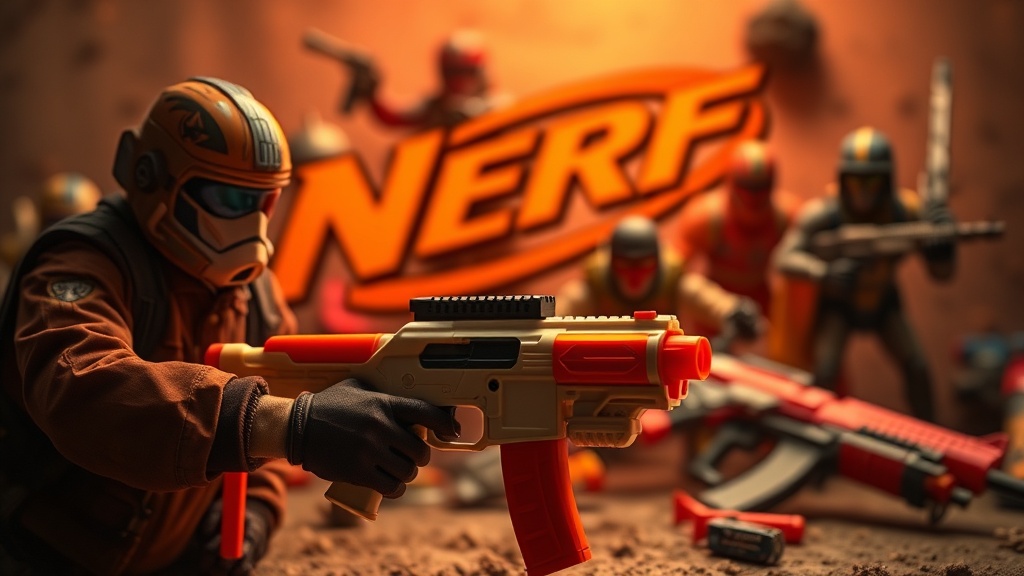
Lost Eras of Nerf Branding and Iconic Toy Lines

The Early Dart Era
The Rise of Themed Collections
The Modern Blaster Revolution
Imagine finding an old, dusty box in your attic labeled "NERF" from the late 1990s, only to realize the branding looks nothing like the sleek, high-performance blasters we see today. The logo used to be a simple, bold font, and the product lines were often more experimental or even niche. This post looks at the distinct eras of Nerf branding, the specific toy lines that defined different decades, and how the company shifted from a general toy manufacturer to a specialized blaster brand.
What Defined the Different Eras of Nerf Branding?
The branding eras of Nerf are defined by shifts in target demographics and the transition from generic foam play to specialized combat-style blasters.
In the early days, Nerf wasn't just about blasters; it was a brand that covered everything from balls to stuffed animals. The branding was much more "toy-centric" and less "gear-centric." You had the classic, bright orange and blue aesthetic that felt soft and approachable. It wasn't trying to look like tactical gear—it was trying to look like fun.
Then came the mid-2000s. This was a massive pivot point. The branding started to lean into more aggressive, "extreme" aesthetics to capture the interest of older kids and even the burgeoning hobbyist market. The designs became sharper, the colors more varied, and the marketing started focusing on "battle" and "competition."
It's a fascinating evolution to track. One moment you're looking at a soft, rounded foam ball, and the next, you're looking at a motorized, high-velocity blaster with complex mechanical parts. It’s a huge leap in both design philosophy and manufacturing complexity.
The Three Major Eras
- The Classic Era (Pre-2000s): Characterized by simple, sturdy designs and a focus on general foam play. The branding was friendly, bright, and lacked the "tactical" edge we see now.
- The Transition Era (Early to Mid-2000s): This is when the "Blaster" identity really took hold. Lines like N-Strike began to emerge, shifting the focus toward combat-style play.
- The Modern Era (2010s–Present): A split between high-end collector-focused lines and mass-market play sets. This era includes everything from the highly technical Nerf N-Strike Elite to the specialized, high-performance hobbyist releases.
What Happened to the N-Strike Era?
The N-Strike era remains the most iconic period for many collectors because it introduced the concept of modularity and customization to the mass market.
If you were a kid in 2006, you didn't just want a blaster; you wanted a platform. The N-Strike line allowed players to swap out barrels, add sights, and change stocks. This was revolutionary for a toy brand. It turned a single purchase into a potential collection of parts. It wasn't just a toy—it was a system.
Many fans feel that the "soul" of Nerf was strongest during this time. The branding was bold, the colors were unapologetically bright, and the modularity felt endless. However, as the market moved toward more realistic "tactical" looks, the classic N-Strike aesthetic began to fade.
The shift toward the "Elite" branding was a way to streamline the product line, but it also marked the end of that wild, experimental feeling of the early N-Strike days. It’s a bit of a bittersweet memory for long-time collectors.
To understand the technicality of how these blasters evolved, you might find tracing the evolution of dart flight technology helpful for seeing how the projectile itself changed alongside the branding.
How Much Do Rare Era Blasters Cost Now?
The cost of rare era blasters depends heavily on whether they are complete in the original packaging or if they are loose-out-of-box items.
Collectors often pay a premium for "dead" lines—those that were produced for a very short window or were part of a specific, localized release. For example, certain N-Strike modules or early experimental blasters can command hundreds of dollars on the secondary market.
Here is a general breakdown of how different eras tend to price out in the current collector market:
| Era | Typical Item Type | Value Factor |
|---|---|---|
| Classic (Pre-2000s) | Vintage Foam Balls/Soft Toys | Low (unless extremely rare/mint) |
| N-Strike Era (Mid-2000s) | Modular Blasters/Complete Sets | High (especially for unreleased colors) |
| Modern/Elite Era | Standard Blasters | Low to Moderate |
| Specialty/Hobbyist | High-Performance/Limited Runs | Very High |
It's important to note that "complete in box" (CIB) status is the biggest driver of price. A blaster that is loose and missing its original darts might only be worth a fraction of a sealed N-Strike unit.
If you're looking to invest, don't just look at the blaster itself. Look at the accessories. Often, the rare, discontinued modules or specialized dart types are where the real value hides. It's a deep rabbit hole, but a profitable one if you know what to look for.
The Impact of Branding on Play Patterns
Branding isn't just about a logo; it's about how a child—or an adult—interacts with the object. The shift from "toy" branding to "gear" branding changed the very nature of the hobby.
When the branding was focused on "play," the goal was simple: hit your friend with a foam ball. When the branding shifted toward "combat" and "tactical gear," the goal became more complex: accuracy, reload speed, and customization. This change actually birtい the modern high-performance hobbyist scene.
We see this in the way manufacturers now design blasters. They aren't just making toys; they are making tools for a specific type of competition. This is why you see so much focus on things like seal integrity and spring tension. If you want to get into the weeds of how these mechanics actually work, you should check out my post on improving your blaster performance with spring and seal upgrades.
The branding tells you what you're supposed to do with the item. A bright blue and orange blaster says "play." A matte black, modular blaster says "compete." This distinction is what separates a casual user from a dedicated collector.
Looking back, it's clear that the "lost" eras weren't just about different colors or logos. They were about different ways of seeing the world. The transition from the soft, whimsical era to the high-performance, technical era is a perfect microcosm of how the toy industry itself has matured.
It's a lot to wrap your head around, but once you see the patterns, the history of these brands becomes much clearer. The era of the "toy" might be gone, but the era of the "blaster" is just getting started.